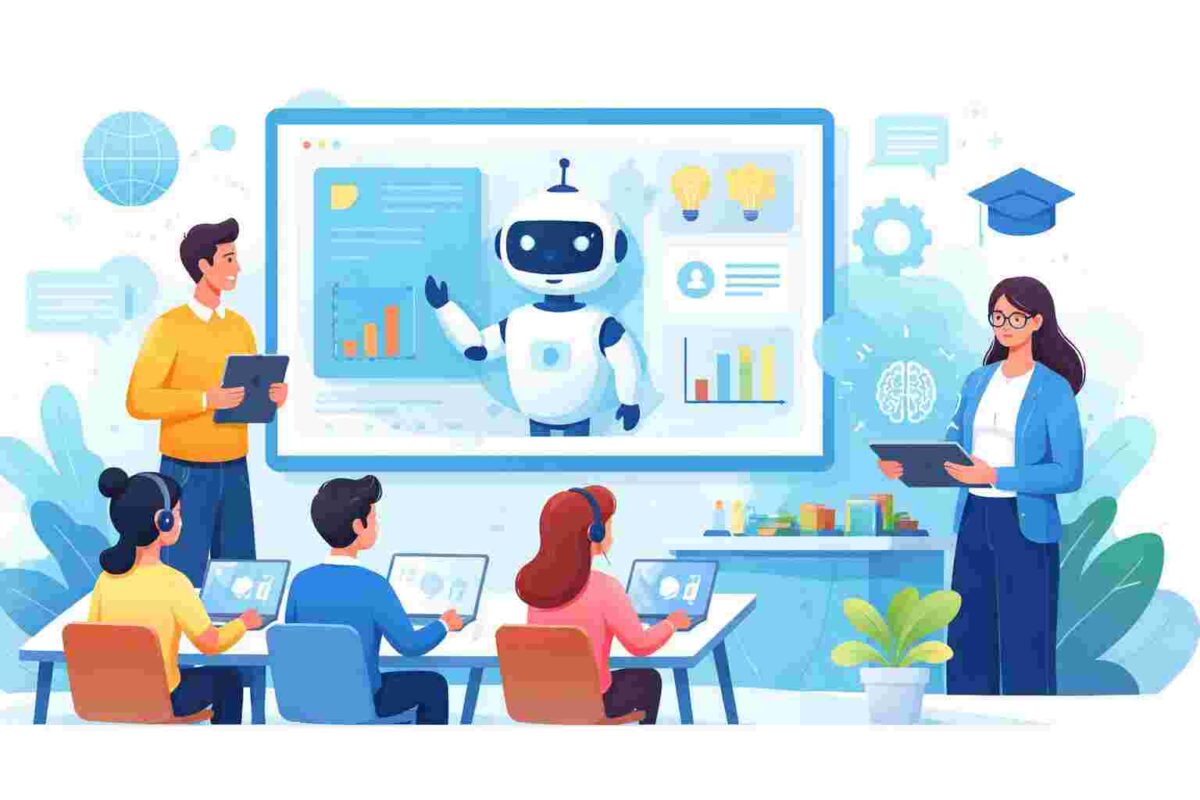
The advent of artificial intelligence (AI) has brought about significant changes in various sectors, and education is no exception. AI in education examples showcase how innovative technologies are reshaping traditional learning environments, enhancing teaching methodologies, and providing personalized experiences for students. This article delves into the transformative potential of AI in education, examining its foundational concepts, technical mechanisms, business impact, strategic advantages, limitations, and future prospects.
Table of Contents
Foundational Concepts of AI in Education
To understand the role of AI in education, it’s essential to grasp the foundational concepts that underpin its application. AI is a simulation of human intelligence processes by machines, particularly computer systems. In educational contexts, this technology offers various applications that can significantly enhance learning experiences.
Definition of AI in Education
- AI refers to the capability of a machine to imitate intelligent human behavior.
- In education, AI can facilitate personalized learning experiences and automate administrative tasks.
- The integration of AI in educational tools allows for adaptive learning environments tailored to individual student needs.
- AI can also support teachers by providing insights into student performance and engagement.
Types of AI Technologies Used
- Machine Learning: Algorithms that allow software applications to become more accurate at predicting outcomes without being explicitly programmed.
- Natural Language Processing (NLP): Enables machines to understand and respond to human language, useful for developing tutoring systems.
- Computer Vision: Used for analyzing visual data, which can enhance learning through multimedia resources.
- Robotics: AI-powered robots can assist in teaching various subjects, providing interactive learning experiences.
Benefits of AI in Learning Environments
- Personalized Learning: Students receive tailored educational content that meets their specific learning needs.
- Increased Efficiency: Automating administrative tasks frees up educators to focus more on teaching.
- Real-time Feedback: Immediate assessment helps students understand areas needing improvement.
- Enhanced Engagement: Interactive AI tools foster greater interest in learning materials.
Technical Mechanisms Behind AI Applications in Education
Delving deeper into the mechanics, understanding how AI operates in educational settings provides insight into its capabilities. The technical infrastructure of AI applications includes various sophisticated technologies that work together to deliver seamless educational experiences.
Machine Learning Algorithms in Education
- Supervised Learning: Used for predicting outcomes and providing feedback based on historical data.
- Unsupervised Learning: Helps in clustering similar data points to provide personalized recommendations.
- Reinforcement Learning: An iterative approach enabling systems to learn from interaction and improve over time based on feedback.
- Deep Learning: Neural networks with many layers that can analyze vast amounts of data for intricate patterns.
Natural Language Processing Applications
- Chatbots for instant communication with students.
- Assessment tools evaluating student responses in essay format.
- Language translation features to support non-native speakers.
- Content generation tools that help create study guides or summaries.
Data Analytics for Learning Insights
- Dashboards showing real-time student performance statistics.
- Tools predicting student outcomes and identifying at-risk students.
- Analytics driving curriculum development based on student engagement data.
- Monitoring engagement levels through software tracking usage patterns.
Business Impact of AI in Education
The integration of AI in education is not merely technological; it brings substantial economic implications across various educational sectors. As institutions adopt AI technologies, the positive outcomes impact their operations and efficiency, translating to valuable ROI.
K-12 Education
- Increased access to learning materials via AI-driven platforms.
- Cost reductions in administrative expenses due to automation.
- Higher student test scores owing to personalized learning methods.
- Improved teacher effectiveness through data-driven insights.
Higher Education
- Enhanced recruitment processes utilizing predictive analytics.
- AI-assisted advising systems improving student guidance.
- Research efficiencies with AI tools analyzing large datasets.
- Financial savings through reduced classroom management time.
Corporate Training and Development
- Tailored training programs increasing employee performance.
- Reduced onboarding times with AI-based training modules.
- Cost-effective reskilling initiatives powered by simulation software.
- Insights into employee progress and training effectiveness through analytics.
Strategic Advantages of AI Integration in Education
Educational institutions have begun recognizing the strategic advantages conferred by AI integration, which moves beyond mere automation to unlocking smarter educational questioning and processes, hence improving the educational landscape.
Personalized Learning Experiences
- Adaptive learning paths allowing students to progress at their own pace.
- Customizable assessments that align with individual strengths and weaknesses.
- Virtual tutoring available 24/7 to aid in homework and study queries.
- Learning styles and preferences identified through AI diagnostics.
Increased Efficiency and Productivity
- Streamlining administrative tasks such as grading and attendance tracking.
- Reducing redundancy in curriculum management through data analysis.
- Facilitating better time management for educators through automated scheduling tools.
- Providing learning resources tailored to each student in real-time.
Improved Student Engagement
- Interactive learning games and applications capturing student interest.
- Real-time feedback mechanisms encouraging participation.
- Leveraging augmented reality (AR) and virtual reality (VR) to create immersive learning experiences.
- Gamification of learning activities stimulating competitive elements in education.
Limitations and Risk Considerations of AI in Education
Despite the promising advantages, the implementation of AI in education comes with its own set of challenges and risks that educational institutions must navigate carefully. Awareness of these potential pitfalls can guide better integration strategies.
Data Privacy Concerns
- Regulation compliance regarding student data protection laws.
- Risks of data breaches exposing sensitive information.
- Ethical considerations surrounding data usage and consent.
- Maintenance of secure infrastructure to protect student records.
Bias in AI Algorithms
- Possible reinforcement of existing biases within educational assessment tools.
- Disparities in learning outcomes based on algorithmic inequalities.
- Need for continuous auditing of AI systems to ensure fairness.
- Challenges in developing diverse datasets for training AI models.
Dependence on Technology
- Risk of diminished critical thinking skills among students.
- Increased reliance on AI tools may create learning gaps.
- Potential for educational inequities amongst students with limited access to technology.
- Concerns over the loss of human interaction in teaching and learning environments.
Comparative Evaluation of AI Tools in Education
With numerous AI tools available in the educational sector, a comparative evaluation helps stakeholders make informed decisions regarding the most suitable products for their unique needs. Below is a detailed comparison of a few leading AI tools designed for educational purposes.
| Tool | Functionality | Advantages | Limitations |
|---|---|---|---|
| Classroom Management Tools | Organizes and optimizes classroom workflows, including attendance, grading, and communication. | Streamlined administrative tasks. | Possible learning curve for educators. |
| Assessment and Grading Software | Automatically grades assessments and provides feedback. | Real-time analysis of student performance. | Dependence on the quality of input data. |
| Learning Management Systems | Platforms that support course delivery and student engagement. | Resource accessibility and tracking of progress. | Interoperability issues with other systems. |
Statistics and Market Trends in AI-Driven Education
As AI continues to evolve within the educational field, it is essential to look at statistics that illuminate adoption rates and market dynamics. Understanding these trends can provide insights into how widely AI is being embraced and its expected impact.
Market Growth Projections
The global market for AI in education was valued at approximately $1 billion in 2020 and is projected to reach around $6 billion by 2025, reflecting a compound annual growth rate (CAGR) of 47.5%. This exponential growth indicates a significant shift towards AI-driven solutions in education as institutions recognize the value they bring.
Usage Rates of AI Tools
According to a recent survey, roughly 60% of educational institutions reported using AI tools to enhance learning experiences. This figure speaks volumes about the growing trust in AI technologies among educators and administrators.
Investment Trends in Educational AI
Investment in AI-driven educational technologies is expected to grow significantly, with over $1.5 billion in funding directed towards AI education startups in recent years. This surge in capital demonstrates the faith investors have in the potential of AI to address educational challenges.
Real-World Case Studies of AI Enhancing Education
Concrete evidence of AI’s efficacy in education is best illustrated through case studies that highlight successful implementations and measurable outcomes. These real-life examples provide a compelling argument for the minimal barriers to adopting AI in various educational contexts.
Case Study 1: Personalized Learning Outcomes
A mid-sized school district implemented an AI-assisted learning platform that tailored educational content based on individual student assessments. Prior to implementation, student engagement was found to be low, with only 40% of students achieving passing grades. After introducing AI technology, engagement levels soared to over 85%, and passing rates rose to 75%, showcasing the positive impact of personalized learning.
Case Study 2: AI for Administrative Efficiency
A large university adopted AI for administrative processes, automating grading and attendance tracking. The administrative workload was reduced by 30%, allowing staff to redirect focus towards student engagement activities. As a result, student satisfaction ratings improved by 20% in annual surveys.
Case Study 3: Enhancing Student Retention Rates
A community college utilized predictive analytics to identify at-risk students early in their enrollments. Prior to the initiative, the dropout rate hovered around 30%. Following AI implementation, the retention rate increased to 85% after targeted interventions were put in place, illustrating how AI can inform proactive strategies for student retention.
Future Outlook for AI in Education
The future landscape of AI in education points towards more integrated and holistic solutions that aim not only at enhancing learning experiences but also at improving institutional efficiencies. Several emerging technologies and trends are expected to play a pivotal role in shaping this future.
Emerging Technologies
- Enhanced AI-driven analytics providing deeper insights into student behavior.
- The rise of virtual and augmented reality tools for immersive learning experiences.
- Advancements in AI-powered gamification strategies to boost engagement.
- Integration of blockchain technology for secure, transparent record-keeping.
Potential Impact on Teaching Methods
- Shift towards hybrid learning models incorporating AI as a core component.
- Teachers acting more as facilitators rather than traditional lecturers.
- Expansion of multicultural curricula driven by AI insights.
- Continuous professional development for educators through AI-backed training programs.
Long-term Predictions for Educational Outcomes
- Increased accessibility of education for underserved communities through AI mechanisms.
- Better alignment between education and the needs of the labor market.
- Longitudinal studies linking AI usage to sustained improvements in educational attainment.
- A shift towards a lifelong learning model where AI facilitates ongoing educational journeys.
Frequently Asked Questions about AI in Education
What are the most popular AI tools in education?
Among the top AI tools in education, platforms like Knewton, which uses analytics to personalize learning materials, and Duolingo, which incorporates gamification and AI into language learning, have gained popularity. Many institutions also utilize AI-powered learning management systems, like Moodle, to enhance course delivery and student engagement. The choice of AI tool often depends on the specific needs of the institution and its goals for educational improvement.
How does AI personalize learning?
AI personalizes learning by leveraging student data to craft tailored educational experiences. By assessing past performance, learning styles, and preferences, AI algorithms can create customized learning paths that suit individual student needs. For instance, systems can suggest different learning modules or resources based on student progress, ensuring that education is adaptive and responsive to the learner’s pace.
What are the risks of AI in classrooms?
While AI offers transformative potential, it also carries risks such as data privacy concerns, algorithmic bias, and potential over-reliance on technology. Data breaches can expose sensitive student information, while inherent biases in algorithms can lead to unequal educational outcomes. Moreover, excessive dependence on AI can impede social skills and engagement with traditional learning methodologies.
Can AI replace teachers?
AI is unlikely to replace teachers but rather augment their roles. The human element of teaching—empathy, motivation, personal interaction—cannot be replicated by AI. Instead, AI serves as a supportive tool that can assist teachers by providing insights and automating tasks, allowing them to focus on the more nuanced aspects of education that require human touch.
What is the future role of AI in education?
The future role of AI in education is poised to be significant, with expectations that it will lead to more personalized, immersive, and efficient learning environments. AI is anticipated to facilitate greater collaborations among global educational bodies, streamlining best practices and knowledge-sharing. As technology continues to evolve, it will mold educational frameworks to meet the changing demands of society and the workforce.
How do educational institutions measure AI effectiveness?
To measure the effectiveness of AI tools, educational institutions often employ metrics such as student achievement data, engagement levels, and feedback from students and educators. Surveys and analytics can help gauge improvements in retention rates, graduation rates, and overall student satisfaction. Continuous monitoring and adaptation of strategies ensure that AI tools deliver optimal outcomes tailored to the institution’s goals.
Conclusion: The Future of AI in Education
In conclusion, the exploration of AI in education examples reveals a dynamic and evolving landscape characterized by innovation and promise. The integration of AI technologies can transform learning experiences, improve efficiencies, and enhance student outcomes. As we navigate the complexities of AI’s impact on education, it becomes vital to embrace its potential while remaining aware of the associated risks and limitations. Emphasizing a collaborative approach that incorporates both technological advancements and human insight will be crucial to harnessing the full potential of AI in the educational sector.