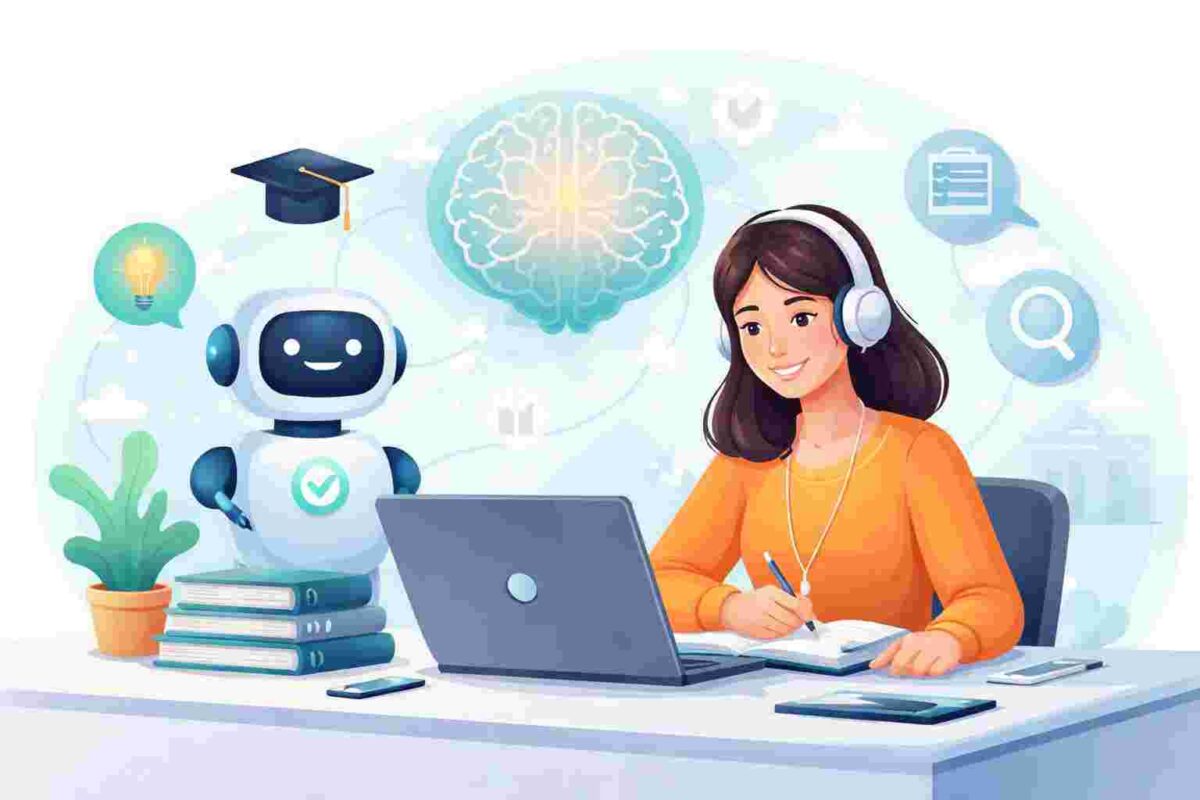
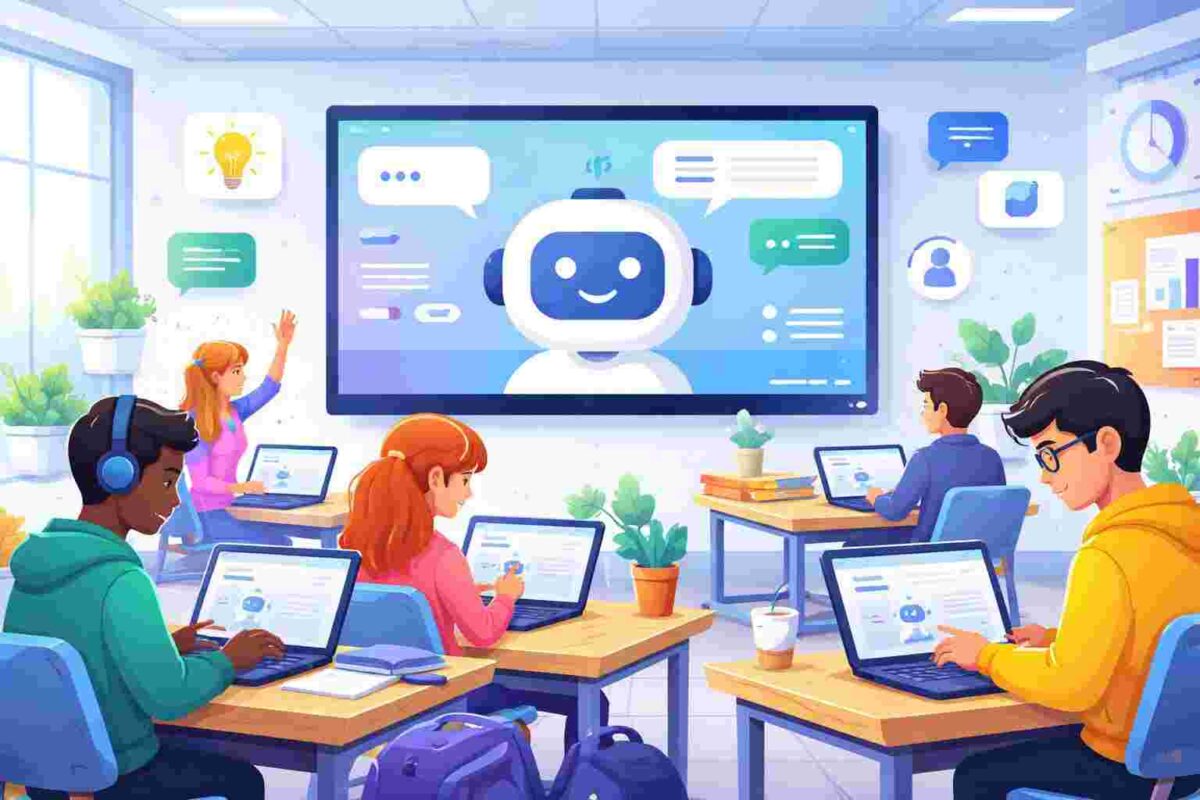
In today’s digital learning environment, ChatGPT for Students has become one of the most transformative tools in modern education. From homework help and research assistance to exam preparation and writing support, students across schools and universities are leveraging AI to study smarter—not harder.
Table of Contents
Education is evolving rapidly. According to a 2023 survey by Education Week, more than 50% of students reported using AI tools to support their academic work in some form. This shift signals a new era in personalized learning, where artificial intelligence enhances—not replaces—human effort.
But how exactly ChatGPT for students can effectively without becoming dependent on it? How can it improve productivity, comprehension, and academic performance?
Let’s explore seven powerful ways ChatGPT for students can maximize ChatGPT responsibly and strategically.
Why ChatGPT for Students Matters in Modern Education
Before diving into strategies, it’s important to understand why ChatGPT is gaining popularity in academic settings.
Traditional studying often involves:
- Searching through multiple sources
- Re-reading textbooks
- Struggling with unclear concepts
- Limited access to personalized help
ChatGPT offers instant clarification, structured explanations, and interactive responses. Instead of passively consuming information, students can engage in dialogue-based learning.
Key benefits include:
- Immediate feedback
- Simplified explanations
- Customized examples
- Time-saving research support
- Writing assistance
When used properly, ChatGPT becomes a study companion rather than a shortcut.
7 Powerful Ways to Use ChatGPT for Students
1. Simplifying Complex Concepts Instantly
Many students struggle when textbooks use advanced terminology. ChatGPT can break down difficult topics into simpler language.
For example, instead of rereading a dense biology chapter, students can ask:
“Explain photosynthesis in simple terms.”
The tool can provide a concise explanation, examples, and even analogies.
Why This Works:
- Reduces cognitive overload
- Encourages conceptual clarity
- Saves time
Practical Tip:
After receiving an explanation, ask follow-up questions like:
- “Can you give a real-life example?”
- “Explain this as if I’m in 8th grade.”
This iterative learning strengthens understanding.
2. Creating Structured Study Plans

Time management is a major challenge for students.
ChatGPT can generate personalized study schedules based on:
- Exam date
- Subjects
- Available study hours
- Strengths and weaknesses
Example request:
“Create a 2-week study plan for my math and history exams.”
The AI can structure daily goals, revision sessions, and practice tests.
Benefits of AI-Based Planning:
- Balanced workload
- Reduced procrastination
- Clear daily objectives
- Improved accountability
According to research from the National Education Association, students who follow structured study plans improve retention rates by up to 25%.
3. Improving Essay Writing and Assignments
One of the most powerful uses of ChatGPT for Students is writing support.
It can help with:
- Brainstorming ideas
- Creating outlines
- Refining thesis statements
- Improving clarity and grammar
- Suggesting better vocabulary
Example Workflow:
- Ask for essay outline
- Draft your own version
- Request feedback
- Refine based on suggestions
This keeps the student actively involved instead of copying.
Important Rule:
Never submit AI-generated content without editing and understanding it. Many institutions have academic integrity policies regarding AI use.
According to a survey by Turnitin, 70% of educators support AI-assisted learning when students remain transparent and responsible.
4. Generating Practice Questions and Quizzes

Testing yourself is one of the most effective study techniques.
ChatGPT can create:
- Multiple-choice questions
- Short-answer questions
- Flashcards
- Mock exams
Example prompt:
“Generate 10 multiple-choice questions on World War II with answers.”
Self-testing improves long-term memory retention significantly. According to cognitive psychology research, active recall improves retention by up to 50% compared to passive reading.
5. Assisting with Research and Summaries
Research assignments can be time-consuming.
ChatGPT helps by:
- Summarizing lengthy articles
- Explaining research papers
- Generating topic ideas
- Structuring research frameworks
However, students must always verify information from credible sources.
For authoritative research practices, students can refer to educational guidelines provided by institutions such as Harvard University’s research guide:
https://guides.library.harvard.edu/research
Smart Research Workflow:
- Ask ChatGPT for topic breakdown
- Collect academic sources
- Verify facts
- Write independently
- Use ChatGPT for clarity improvements
This ensures academic integrity.
6. Learning Through Role-Play and Dialogue

Interactive learning improves engagement.
Students can ask ChatGPT to:
- Act as a history teacher
- Simulate a debate
- Conduct mock interviews
- Practice foreign language conversations
Example:
“Pretend you are my economics professor and quiz me on supply and demand.”
This makes studying dynamic rather than passive.
7. Boosting Productivity and Reducing Study Stress
Academic pressure affects many students.
ChatGPT can help by:
- Breaking large tasks into manageable steps
- Providing motivational strategies
- Suggesting productivity techniques
- Offering quick clarification instead of long searches
Example Productivity Framework:
| Task Type | How ChatGPT Helps |
|---|---|
| Homework | Clarifies instructions |
| Revision | Creates summaries |
| Essay Writing | Generates outlines |
| Exam Prep | Creates mock tests |
| Research | Suggests topic structures |
By reducing confusion, students can focus on actual learning rather than administrative struggle.
Comparison: Traditional Study vs AI-Assisted Study
| Factor | Traditional Study | ChatGPT-Assisted Study |
|---|---|---|
| Feedback Speed | Delayed | Instant |
| Personalization | Limited | High |
| Study Planning | Manual | Automated |
| Practice Testing | Self-created | AI-generated |
| Concept Clarification | Textbook-based | Interactive |
AI-assisted learning does not replace textbooks or teachers. Instead, it enhances learning efficiency.
Responsible Use of ChatGPT for Students
While ChatGPT is powerful, misuse can harm academic growth.
Follow These Guidelines:
- Use it as a tutor, not a replacement
- Verify important facts
- Avoid plagiarism
- Understand before submitting
- Follow school AI policies
Responsible use ensures long-term benefits.
Common Mistakes Students Make
- Copying AI content without editing
- Relying on AI for critical thinking
- Ignoring fact verification
- Using AI during restricted exams
Avoiding these mistakes protects academic integrity.
The Future of AI in Education
Artificial intelligence is becoming deeply integrated into education systems.
Future developments may include:
- Personalized AI tutors
- Real-time feedback systems
- AI-driven grading assistants
- Adaptive learning platforms
As AI evolves, students who learn to use it responsibly will gain significant advantages.
FAQs About ChatGPT for Students
1. Is ChatGPT allowed in schools?
Policies vary by institution. Some schools encourage guided use, while others restrict AI-generated submissions.
2. Can ChatGPT replace teachers?
No. It supports learning but cannot replace human instruction and mentorship.
3. Is it safe to rely on ChatGPT for research?
It can assist with structure, but students must verify facts from reliable sources.
4. Does using ChatGPT count as cheating?
Only if used improperly or against academic policies.
5. How can I use ChatGPT without becoming dependent?
Use it for clarification and structure, but write and think independently.
6. Does ChatGPT improve grades?
When used strategically for understanding and practice, it can enhance performance.
Conclusion
ChatGPT for Students represents a powerful shift in how learners approach education. From simplifying complex concepts to generating practice exams and structured study plans, it offers tools that enhance efficiency and comprehension.
However, success depends on responsible usage. Students who use AI as a supportive learning assistant—not a shortcut—can significantly improve productivity, understanding, and confidence.
As education continues evolving, mastering AI-assisted study techniques may become just as important as mastering the subjects themselves.